Handhelds · Buyer's guide
Steam Deck OLED vs. PlayStation Portal vs. ASUS ROG Ally: Which to Choose for Handheld Gaming?
Handheld gaming is enjoying a new golden age. You can now play big releases on the sofa, while travelling or on holiday, but the devices that make this possible work in completely different ways. The Steam Deck OLED, PlayStation Portal and ASUS ROG Ally are often compared, yet they represent three different philosophies. We look at how they differ and which one is right for you.

Three Different Approaches to Handheld Gaming
Steam Deck OLED: A Well-Balanced Handheld PC
Valve's refreshed Steam Deck launched in late 2023 with a 7.4-inch HDR OLED display running at up to 90 Hz, a more power-efficient processor and a larger 50 Wh battery. It runs SteamOS, plays most of the Steam library and stands out for its polish: the interface, sleep and resume and cloud saves all work like on a traditional console.
PlayStation Portal: A Screen for Your PS5
The Portal is not a standalone console but a Remote Play device: games run on your PS5 at home and stream to an 8-inch 1080p screen over Wi‑Fi. In your hands is a full DualSense with adaptive triggers and haptic feedback. Sony later added cloud streaming of selected games for PlayStation Plus Premium members, but the main use case still requires a PS5 and a stable internet connection.
ASUS ROG Ally: A Windows Handheld for Maximum Freedom
The ROG Ally runs full Windows 11 and supports any store: Steam, Epic Games Store, Xbox Game Pass, GOG and more. The AMD Ryzen Z1 Extreme version has a 7-inch 1080p 120 Hz display with VRR support. Updated models followed, including the ROG Ally X with an 80 Wh battery and more memory.
Key Specifications Compared
| Specification | Steam Deck OLED | PlayStation Portal | ASUS ROG Ally |
|---|---|---|---|
| Device type | Handheld PC | Streaming device | Handheld PC |
| Display | 7.4″ HDR OLED, up to 90 Hz | 8″ LCD, 1080p, 60 Hz | 7″ IPS, 1080p, 120 Hz, VRR |
| Operating system | SteamOS | Sony's own firmware | Windows 11 |
| Library | Steam (most games) | Games from your PS5 | Practically any PC store |
| Offline play | Yes | No | Yes |
| Battery | 50 Wh | Built-in, designed for streaming | 40 Wh (80 Wh on Ally X) |
Display and Battery Life
The Steam Deck OLED leads on image quality: deep blacks, bright HDR and rich colours make its screen the best of the three. The ROG Ally has a higher resolution and refresh rate, which helps in fast-paced games. The PlayStation Portal has the largest screen, and because the game itself is processed on the PS5, it drains its battery more slowly than handheld PCs.
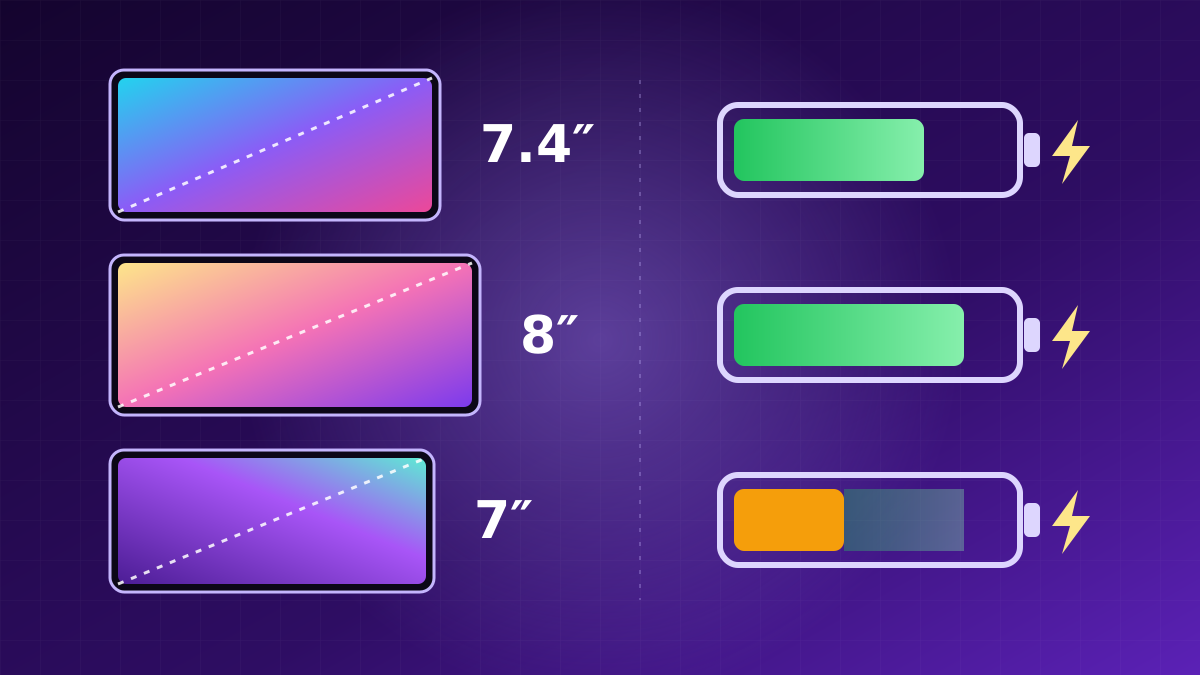
In demanding games, handheld PC battery life drops noticeably: the Steam Deck OLED generally lasts longer, while the original ROG Ally is known for short battery life under load, which the Ally X fixed.
Performance and Game Library
In raw performance, the ROG Ally with the Z1 Extreme beats the Steam Deck in most games, especially in its high-power mode. The Steam Deck, however, wins on optimisation: many games have been verified by Valve and carry a compatibility badge, and setup requires no extra effort. Windows on the Ally gives access to Game Pass and any launcher but sometimes needs manual tweaking and driver updates. The PlayStation Portal does not depend on its own power at all: the image is whatever your PS5 outputs, and quality depends on the speed and stability of your Wi‑Fi.
Which One Should You Choose?
- Steam Deck OLED is the best choice for most people: a superb screen, stable performance, the familiar Steam ecosystem and the ability to play anywhere without internet.
- PlayStation Portal is for PS5 owners who want to play Sony exclusives in another room while the TV is busy. Without a PS5 and good Wi‑Fi, it loses its purpose.
- ASUS ROG Ally is for experienced PC users, Game Pass subscribers and anyone who wants maximum performance and freedom to use any store.
Handheld gaming is no longer a compromise. The key is to be honest about where and what you plan to play, and then the choice between these three devices becomes obvious.