Consoles · Comparison
PS5 Pro vs. Standard PS5: Is It Worth Paying More for Better Graphics, Ray Tracing and Performance?
The PlayStation 5 Pro launched in November 2024 as Sony's most powerful console. It is also one of the most expensive: the Pro ships without a disc drive or vertical stand, and the price gap with the standard PS5 is significant. We break down what the upgraded model actually delivers, how noticeable the difference is in games and who should really pay the premium.

What Has Changed in the Hardware
Sony kept the same AMD Zen 2 CPU, so the PS5 Pro is primarily a graphics upgrade. The key changes are concentrated in the GPU, memory and upscaling system.
| Specification | PS5 (Slim) | PS5 Pro |
|---|---|---|
| GPU | 36 compute units | 60 compute units (+67%) |
| Memory bandwidth | 448 GB/s | 576 GB/s (+28%) |
| Rendering speed | Baseline | Up to 45% faster |
| Ray tracing | Baseline | 2–3x faster |
| Upscaling | Developer software methods | Machine-learning-based PSSR |
| SSD storage | 1 TB | 2 TB |
| Disc drive | Included in the standard edition | Sold separately |
| Wireless | Wi‑Fi 6 | Wi‑Fi 7 |
Graphics and PSSR: Sharpness Without Compromise
The PS5 Pro's main advantage is PlayStation Spectral Super Resolution (PSSR), a machine-learning upscaler that reconstructs image detail from a lower internal resolution. On the standard PS5, players often have to choose between a "quality mode" with high resolution at 30 frames per second and a "performance mode" at 60 frames but with a softer image. In many games labelled PS5 Pro Enhanced, the Pro delivers a sharp image close to quality mode at around 60 frames per second.
How well PSSR works depends on the specific game and how carefully developers have adapted it. In the best examples, the difference compared with the base console is obvious straight away, especially on a large 4K TV.
Ray Tracing: Where the Difference Is Most Visible
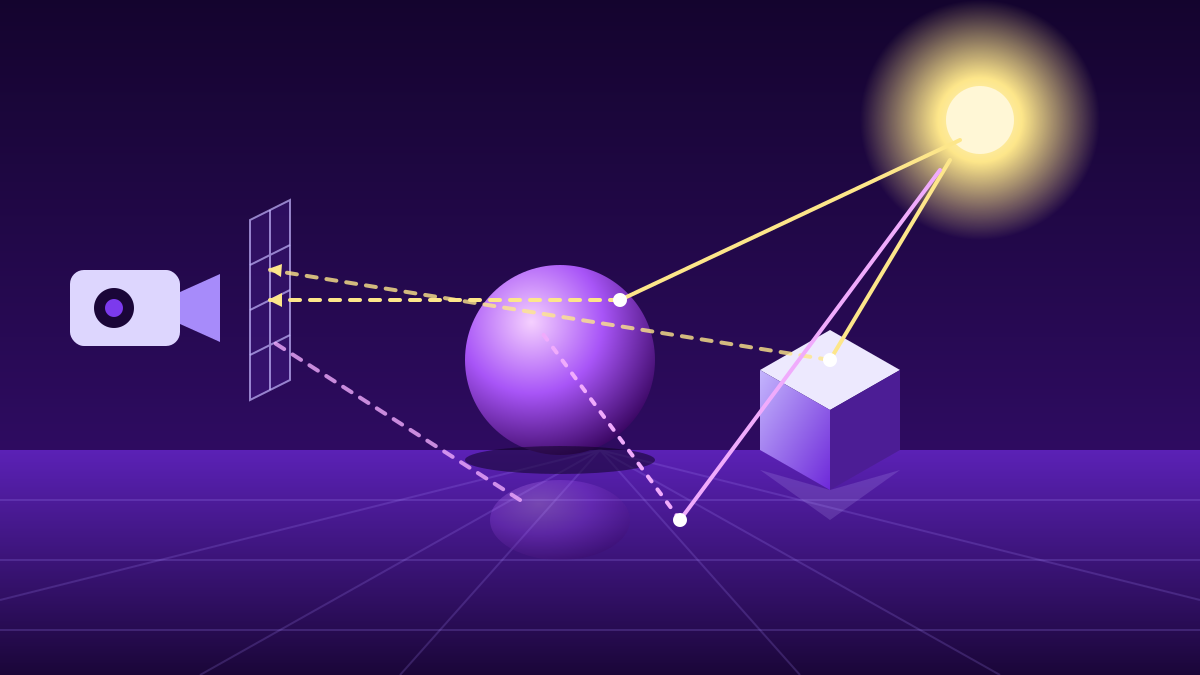
Ray tracing is the most demanding graphics technology, and this is where the Pro pulls furthest ahead of the standard model. On the regular PS5, ray-traced reflections and lighting are usually available only in 30 fps modes or in a cut-down form. On the PS5 Pro, ray tracing that is 2–3 times faster lets games enable reflections, shadows and global illumination without a serious drop in smoothness.
The Downsides of the PS5 Pro
- Price. Once you add the separately sold disc drive and stand, the total cost is noticeably higher than a standard PS5.
- The same CPU. CPU-bound games see little meaningful improvement.
- Reliance on patches. Only titles with PS5 Pro Enhanced support get the full benefit.
- TV requirements. On a Full HD screen, the Pro's advantages are barely visible.
Who Should Pay More and Who Should Not
The PS5 Pro makes sense if you have a 4K TV with 120 Hz and VRR support, value both sharpness and smoothness, play a lot of big ray-traced titles and plan to use the console for several years, for example for GTA 6 and other upcoming AAA hits.
A standard PS5 is enough if you play on a Full HD or budget 4K TV, prefer physical discs, spend more time in online and esports games or simply don't want to pay extra for a difference that isn't visible on every screen.
Bottom line: the PS5 Pro is a console for enthusiasts who want the best possible image right now. For most players, the standard PS5 remains the best choice in terms of value for money.